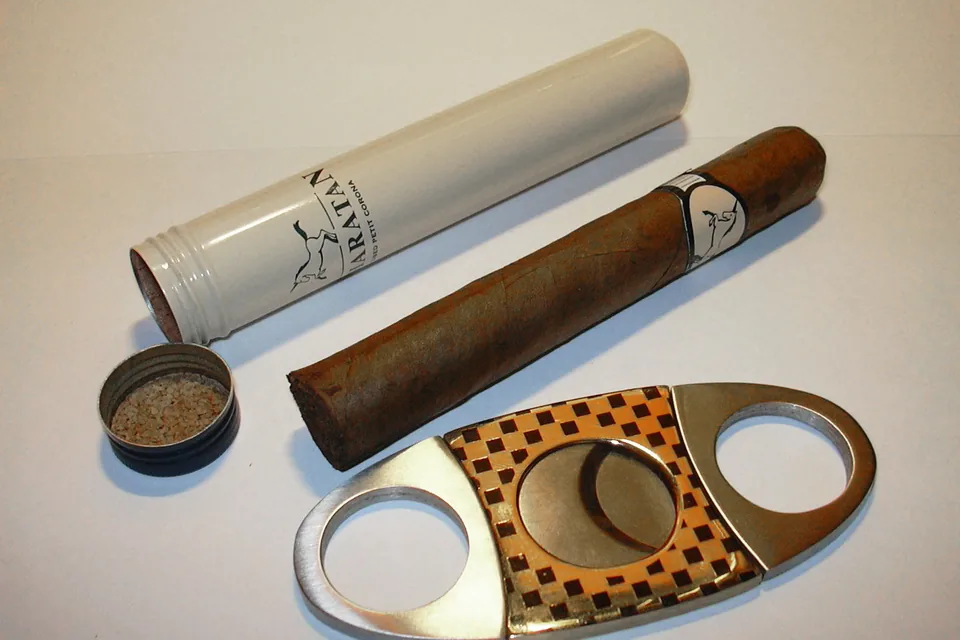
A cigar cutter has one job: to open the cap cleanly so smoke can flow. Get that right and the draw feels easy and even. Get it wrong and the wrapper splits before you have even lit up. This guide compares the main designs, the blade materials and what makes one cutter better than another. For the technique itself, see our step-by-step guide on how to cut a cigar.
What a cigar cutter actually does
Every hand-rolled cigar is sealed at the head by a small round piece of leaf called the cap. A cutter removes part of that cap. The best cut opens the head enough for a free draw, yet leaves the cap line intact so the wrapper stays anchored.
That sounds simple, but tobacco is soft and springy. A blade that is dull, or that closes from only one side, pushes the leaf around instead of slicing it. For that reason, sharpness and design matter far more than looks or price.
Types of cigar cutter compared
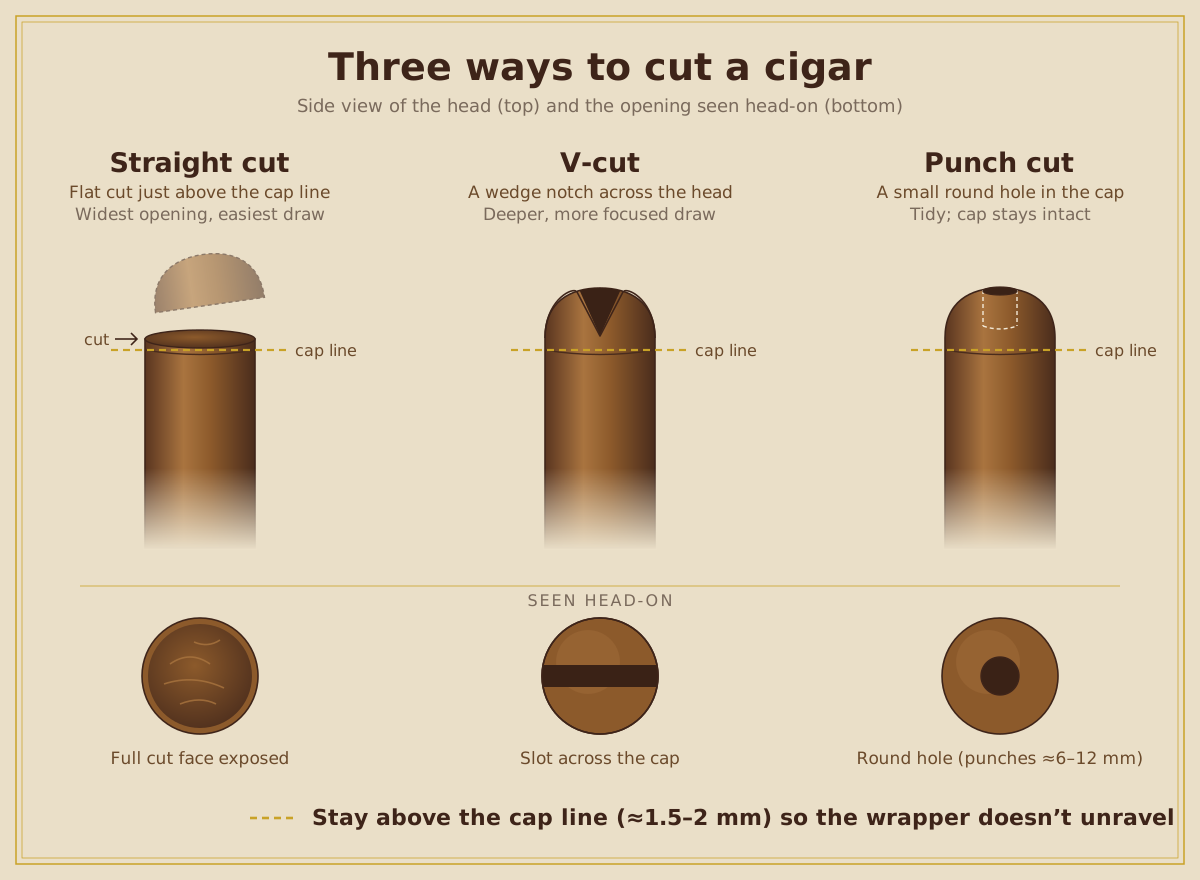
There are four main families. Each one makes a different kind of opening.
| Type | Cut | Strengths | Weaknesses | Ring gauge range |
|---|---|---|---|---|
| Single-blade guillotine | Straight | Simple and light | Pushes the head to one side; can tear | Usually up to the opening size |
| Double-blade guillotine | Straight | Clean, even, forgiving | Opening limits very fat cigars | Commonly up to about 54–60 |
| V-cutter | Wedge | Secure cap, focused smoke | Narrow draw on big cigars; can tar up | Best on parejos up to about 54 |
| Punch | Round hole | Pocket-sized, tidy | No good on pointed heads | Best on 46 and up |
| Cigar scissors | Straight | Handles any size | Takes practice | Any |
Single-blade guillotine
This is the most basic design. One blade slides across an opening and slices the cap off. It works, but the blade presses against one side of the head as it travels. On a soft or slightly dry cigar, that pressure can crack the wrapper. Low-cost plastic versions are fine as spares. However, most smokers soon move to a double blade.
Double-blade guillotine
Two blades close from opposite sides and meet in the middle. As a result, the pressure is even and the head stays round. This is the most versatile cigar cutter you can own. It handles round heads, flat heads and pointed torpedoes, because you choose how far down the taper to cut. If you only ever keep one tool, make it this one.
V-cutter
A V-cutter carves a wedge-shaped notch across the head. Since it removes less of the cap, the wrapper is very secure. The narrow channel also concentrates the smoke on the centre of the tongue. On the other hand, the wedge can feel tight on very thick cigars, and moisture can collect in the notch over a long smoke.
Punch
A punch is a small tube with a sharp circular edge. You twist it into the cap and lift out a neat plug. Punches often hang on a key ring, so they suit people who smoke on the go. Still, they only work on rounded heads. A pointed torpedo or belicoso is simply too narrow.
Cigar scissors
Cigar scissors have short, curved blades that wrap around the head. They cut any ring gauge, from a slim lancero to a giant 70. That said, they take a steady hand, since you need to keep the cut level. They are a favourite in cigar rooms where staff cut for guests.
Cutters for large ring gauges
Big cigars are popular, and they cause most cutter trouble. Many compact guillotines have an opening that tops out around a 60 ring gauge. Forcing a fatter cigar into a small opening squashes the head before the blades even close.
If you smoke gordos or other large formats, check the maximum opening the maker states. Some guillotines are built specifically for very large cigars. Alternatively, a punch of the right diameter or a pair of cigar scissors handles them without fuss. Our guide to cigar sizes explains ring gauge in detail.
Blade materials and build quality
The blade is the heart of any cigar cutter. Here is what the common materials mean in practice.
- Stainless steel. The most common choice. It resists rust, which matters a great deal in Malaysia. Quality varies, so a well-ground edge matters more than the label.
- Carbon steel. It can take a very sharp edge. However, it rusts quickly in humid air unless you keep it dry.
- Coated blades. Some makers add a non-stick or hardened coating to reduce gum build-up. Coatings can wear with use.
- Plastic bodies. Light and inexpensive. Fine for a spare cutter in a car or bag, though the blades often dull sooner.
Beyond the steel, look at the frame. The blades should close smoothly, meet fully, and not wobble. A cutter that needs force to close is either blunt or badly made. Spring-loaded designs open by themselves, which some people like for one-handed use.
What to check before you use a new cutter
Close it slowly and look at the blades against the light. They should meet cleanly with no gap. Then test it on an inexpensive cigar before trusting it with a special one.
How to use a cigar cutter well
Our how to cut a cigar guide covers each cut step by step. In brief, three habits matter most with any tool.
First, find the cap line and stay above it. Second, cut in one quick, firm motion rather than a slow squeeze. Third, test the draw before lighting, and take a second thin slice if it feels tight. These habits matter more than which cutter you own.
Sharpening and maintenance
Most guillotine blades are hard to resharpen at home, because they sit inside a sealed frame. In practice, people replace them once they start to drag. Cigar scissors and some open-frame cutters can be honed, though a professional knife sharpener does it best.
Cleaning is simpler. Natural gum from the cap and bits of leaf build up on the blades over time. Wipe them with a soft cloth, or with a little rubbing alcohol for sticky residue. Then dry the blades fully before you put the cutter away.
In Malaysia, that last step is important. Humid air and a closed pocket or drawer make a perfect home for rust. Store your cutter somewhere dry, not inside the humidor, since the moisture that keeps cigars supple will corrode metal.
Travelling with a cigar cutter
Blades and airport security rarely mix well. Rules vary by country, airport and airline, so check before you fly. In the US, for example, the TSA recommends packing cigar cutters in checked bags and lets officers refuse them at the checkpoint.
The simplest approach is to pack your cutter in checked luggage, wrapped so it cannot injure a baggage handler. If you travel with hand luggage only, a low-cost spare that you are willing to lose may be the practical answer. Our guide to cigar cases and travel covers packing cigars themselves.
Picking your first cutter
Start with one sharp double-blade guillotine with an opening that fits the cigars you smoke. Then live with it for a while. If you find yourself smoking a lot of big ring gauges, add a punch or scissors. If you like a firmer, focused draw, try a V-cutter. Next, pair your cutter with a clean flame. Our guide to cigar lighters explains which flames suit cigars best, and our accessories hub shows how the whole kit fits together.
Frequently asked questions
What is the best type of cigar cutter for beginners?
A double-blade guillotine. It works on round heads and pointed torpedoes alike, and the two blades meet in the middle so the cut stays clean. Add a punch or V-cutter later if you want variety.
How do you use a cigar punch?
Press the circular blade gently into the centre of the cap, twist it half a turn, then pull it out. The plug of tobacco usually comes away inside the punch. Do not push too deep, and never use a punch on a pointed torpedo.
Can you take a cigar cutter on a plane?
It depends on the country and airline. Many airports treat it as a sharp object. In the US, the TSA recommends packing cutters in checked bags and leaves the final call to the officer. The safest habit is to pack it in checked luggage.
How do I know when my cutter is blunt?
It drags instead of snapping shut, leaves a ragged edge, or squashes the head. Shreds of wrapper caught in the blades are another sign. Most guillotines cannot be resharpened well, so replace them.
Do I need a special cutter for large ring gauge cigars?
Often, yes. Many compact guillotines struggle above about a 60 ring gauge. If you smoke big cigars, check the stated maximum opening, or use cigar scissors, which handle any size.