The Davidoff cigar is a Swiss idea with Dominican tobacco. It carries the name of Zino Davidoff, a Geneva tobacconist who became one of the most famous figures in cigars. The brand started in Havana, broke with Cuba in 1990, and rebuilt itself in the Dominican Republic. This profile covers its history, owners, factory, main lines, house style and place in Malaysia.
Zino Davidoff and the Geneva shop
Zino Davidoff was born in 1906 in what is now Ukraine. His family settled in Geneva, and from 1926 he ran the family’s tobacco shop there until his death in 1994. Over those years, the shop became a meeting point for collectors and the name became a byword for quality.
Then, in 1968, Cuba’s state tobacco company began making Davidoff-branded cigars at El Laguito in Havana. The early range included the Château series. Meanwhile, in 1970, Zino sold the Davidoff name to Oettinger, a Basel tobacco firm. That company is now Oettinger Davidoff AG, and it still owns the cigar business.
The break with Cuba
Ties between Davidoff and Cuba soured in the late 1980s. In 1989, Zino famously burned a large number of Cuban cigars that he judged below standard. Soon after, in 1990, the company stopped selling Cuban-made Davidoffs. Sources give 1990 or 1991 as the end of the Cuban line. The gap depends on whether they count the last sales or the formal agreement.
For that reason, any “Cuban Davidoff” you see today is old stock from before 1991, and collectors treat it as a vintage item. Our guide to Cuban cigar history puts this split in wider context.
Dominican production and Henke Kelner
After the split, Davidoff partnered with Hendrik “Henke” Kelner, whose company Tabadom made cigars in Santiago, Dominican Republic. The first Dominican Davidoffs launched in 1990–91 and kept many of the old Cuban sizes. Kelner went on to oversee blending and production for decades.
Today the main range comes from Santiago. However, Davidoff also uses tobacco from Nicaragua, Ecuador, Brazil and elsewhere. Our page on Dominican cigars explains why Santiago became the centre of the trade.
Main lines of the Davidoff cigar range
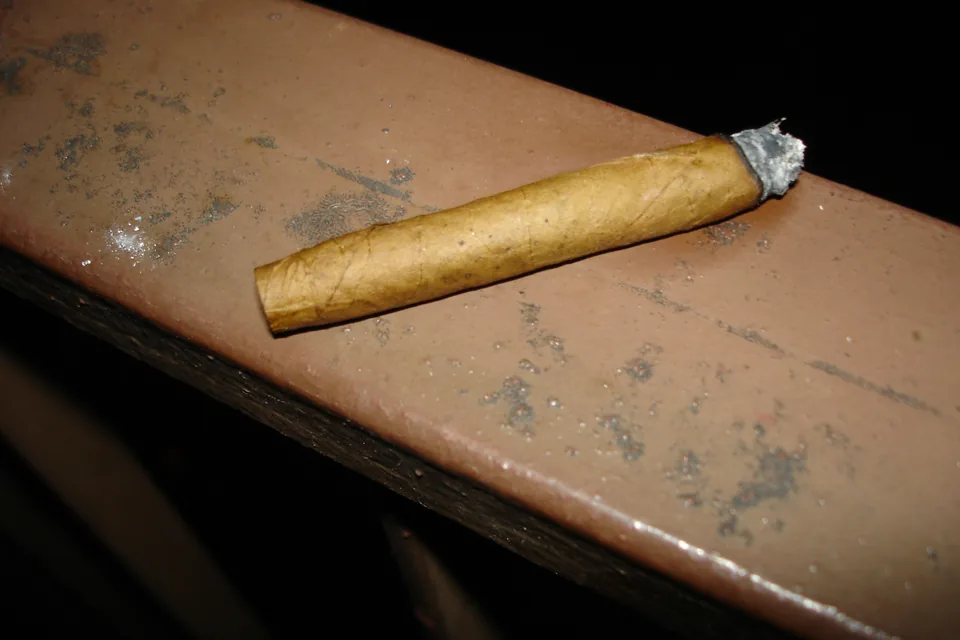
Smokers often call the core range “white label” because of its pale bands. Here are the lines most people know.
| Line | Wrapper | Strength |
|---|---|---|
| Signature | Connecticut-seed, grown in Ecuador | Mild |
| Grand Cru | Connecticut-seed, grown in Ecuador | Mild to medium |
| Millennium | Ecuadorian | Medium |
| Aniversario | Ecuadorian | Mild to medium |
| Winston Churchill | Ecuadorian | Medium |
| Nicaragua | Nicaraguan rosado (Cuban-seed) | Medium |
| Yamasá | Dominican, from the Yamasá region | Medium to full |
| Escurio | Ecuadorian, with Brazilian filler | Medium |
The Signature 2000 is one of the best-known sizes, and our Davidoff Signature 2000 review looks at it closely. Notably, the Davidoff Nicaragua uses only Nicaraguan tobacco but is still rolled in the Dominican Republic.
House style
In general terms, a classic Davidoff cigar is smooth, creamy and refined. Smokers commonly describe cedar, cream, nuts and a light grassiness. The rolling tends to be neat, with an even burn and firm, clean ash.
In recent years, the firm has also added bolder blends. As a result, the range now stretches from very mild to fairly strong, though few lines reach full strength.
Strengths and criticisms
On the plus side, Davidoff has a strong reputation for consistency and construction. It also offers a wide spread of shapes, from slim coronas to large toros. Many smokers see the white-label cigars as a reliable mild choice.
However, the criticisms come up often. Davidoff prices sit near the top of the non-Cuban market, and some smokers feel the flavour does not match the cost. Others find the classic lines too gentle. Finally, the strong brand image can make it hard to judge the cigar on its own merits.
Davidoff in Malaysia
Our keyword research shows Davidoff is the most searched non-Cuban cigar name in Malaysia. Still, Davidoff cigarettes are a different product from a different company, so the name alone can confuse.
If you plan to travel with cigars, read our guide to bringing cigars into Malaysia. Our page on cigar prices in Malaysia explains, in general terms, why imported cigars cost what they do. Above all, mild does not mean harmless, so see our page on cigar health risks.
Where to read more
- Dominican cigars: Santiago and Dominican tobacco
- Arturo Fuente: another Santiago-based house
- Cigar brands: every profile in our directory
Frequently asked questions
Are Davidoff cigars Cuban?
Not any more. Davidoff cigars were made in Havana from 1968 until the split with Cuba in 1990–91. Since then the main range has been made in the Dominican Republic.
Who owns Davidoff cigars?
Oettinger Davidoff AG, a family-controlled company based in Basel, Switzerland. Davidoff-branded cigarettes are a separate business owned by Imperial Brands.
Is Davidoff a mild cigar?
The classic white-label lines, such as Signature and Grand Cru, are mild to medium. Newer lines, including Winston Churchill, Nicaragua and Escurio, are medium or stronger. See our cigar strength guide.
Why are Davidoff cigars expensive?
The company stresses long tobacco ageing, strict leaf selection and a premium image. Our guide to why cigars cost what they do explains the factors behind high prices in general.