Cigars in Malaysia sit in an unusual place. They are legal, Cuban cigars included, and the country has a small but serious scene of specialist stores and lounges. Yet they also fall under a strict tobacco law, a heavy tax by weight, and a climate that is hard on tobacco. This guide pulls it all together: the law, customs, prices, storage, the cities, the culture and the health facts. Each section links to a deeper guide.
This is general information, not legal advice
We read the gazetted law and official Customs pages and cite them throughout. Still, rules change. Check the official text on the Attorney General’s Chambers site, or ask a Malaysian lawyer, before relying on any point.
Cigars in Malaysia at a glance
| Question | Short answer |
|---|---|
| Are cigars legal? | Yes, for adults aged 18 and over |
| Main law | Act 852, the Control of Smoking Products for Public Health Act 2024, in force from 1 October 2024 |
| Smoking in restaurants? | No. Any eating place and the area within 3 m of its tables is non-smoking |
| Duty-free allowance for travellers? | None for tobacco. Declare cigars at the Red Lane |
| Excise duty | RM440 per kilogram of cigars, from 1 November 2025 |
| Online sale? | Banned |
| Cuban cigars? | Legal, through an official distributor |
| Advertising? | Banned, including promotion and sponsorship |
Are cigars legal in Malaysia?
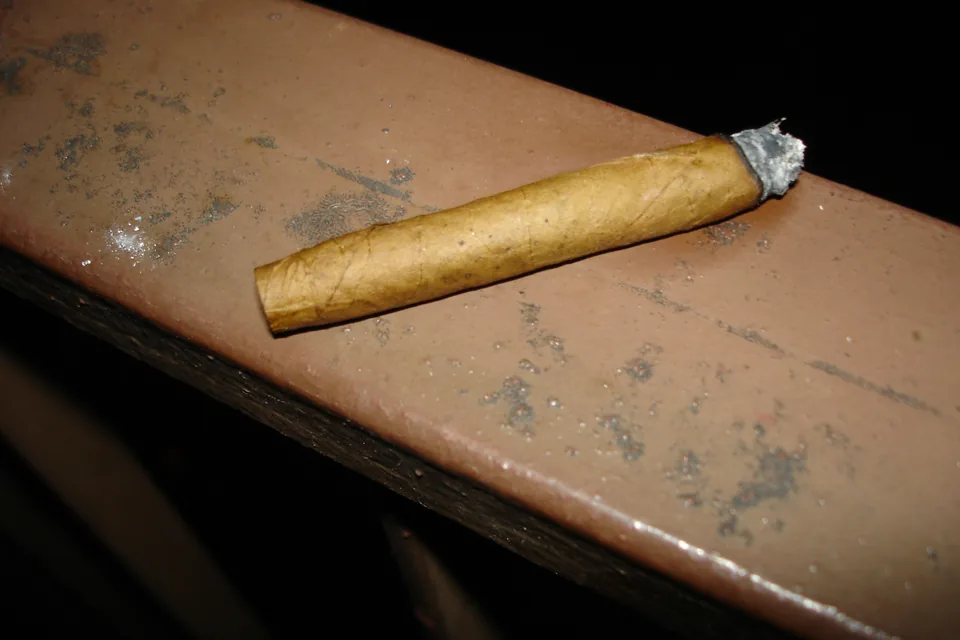
Yes. Adults may buy and smoke cigars. The law controls how and where, but it does not ban them. Cigars count as a “tobacco product” under Act 852, so they follow the same framework as cigarettes. The regulations also name cigars directly, defining one as “a roll of tobacco wrapped in a tobacco leaf”.
The minimum age is 18. Selling to anyone younger is an offence. A minor who buys or smokes also commits an offence, with a fine of up to RM500 or community service.
You may have heard of the Generational End Game, which would have banned tobacco for anyone born from 2007 onwards. MPs dropped it before the Bill passed in November 2023. The final Act has no birth-date rule, so 18 is the only age test.
The law in brief: Act 852
Act 852 replaced the old Food Act regulations and took effect on 1 October 2024. Six instruments made under it took effect the same day. MOH ran a phased year of enforcement, then declared full enforcement from 1 October 2025. For a cigar smoker, these are the main points:
- Advertising, promotion and sponsorship are banned. Section 7 covers ads, including those showing a brand name. Section 9 covers sponsorship, gifts and events.
- Shops may not display tobacco. Only specialised stores licensed solely to sell tobacco may display it, and even then not visibly from outside.
- No online or vending-machine sales. This sits in regulation 3 of the Control of Sale Regulations.
- Products must be registered and labelled. Every cigar sold locally needs registration, graphic health warnings in Malay and an approved price label.
- No smoking in declared places. The maximum fine is RM5,000, usually settled by compound.
Our full guide to Act 852 Malaysia covers each section, the penalty tables and recent enforcement figures. It also explains the honest grey area around cigar lounges.
Where you can and cannot smoke
The Non-Smoking Order 2024 lists 28 categories of non-smoking place. The ones that matter most day to day are eating places, air-conditioned shops, shopping complexes, workplaces, public parks and public transport.
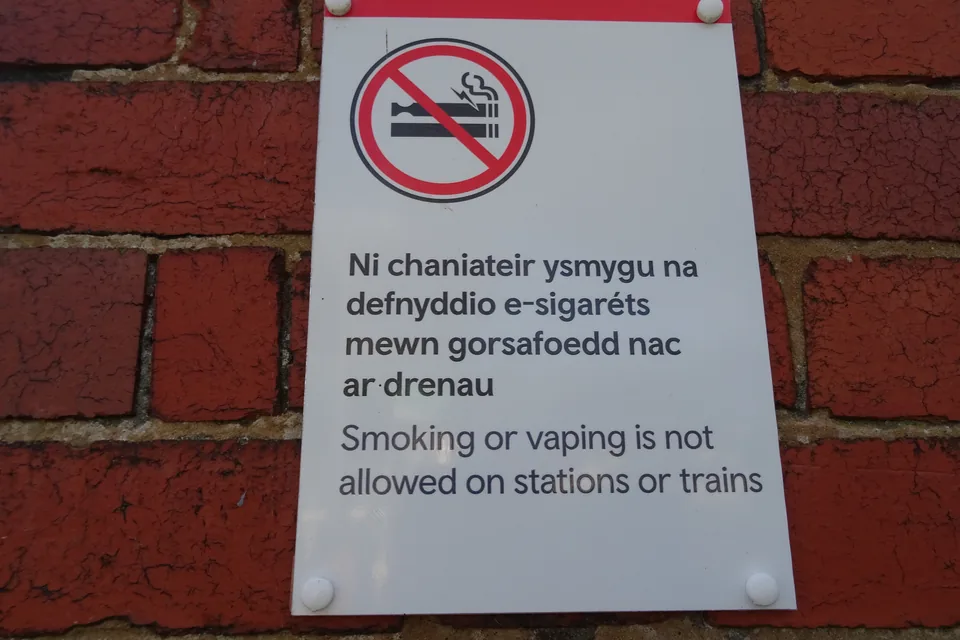
Two rules catch out many visitors. First, an eating place includes any area within 3 m of a table or chair placed for food. That covers the open-air mamak and the hawker centre, not just indoor restaurants. Second, a building includes its five-foot way and 3 m from its building line.
Some places ban smoking across whole zones, even outdoors. These include George Town’s World Heritage Site, Jonker’s Walk in Melaka and covered walkways in central Kuala Lumpur.
Private homes generally sit outside the Order, although condo rules may not. Casinos and listed airport smoking rooms are the only express exceptions. Cigar lounges have no special status in the law, yet they operate openly. We explain that uncertainty, plus hotels and KLIA, in our guide to where to smoke cigars.
Customs in brief
Travellers often assume they can bring in a box or two duty-free. They cannot. The Royal Malaysian Customs Traveler’s Guide excludes “cigarettes; tobacco products” from the traveller exemption, by air and by every other mode.
So declare any cigars at the Red Lane, and Customs will assess the duty. The old 225 g allowance you may still see online is out of date. Langkawi and the other duty-free islands also lost their tobacco exemption on 1 January 2021.
If you come in from Singapore, remember that Singapore taxes all tobacco on arrival too. Foreign-labelled boxes and posted parcels raise further Act 852 questions. Our guide to bringing cigars into Malaysia explains each step.
Prices in brief
Cigars cost what they do here largely because of policy. Excise duty is RM440 per kilogram under the Excise Duties Order 2025. Because it goes by weight, a 10 g cigar carries about RM4.40 in excise alone, by our arithmetic.
On top of that, the Director-General of Health must approve every retail price. Tax rises must be passed on in full, and the legal floor is RM12 per packet. Registration costs RM5,000 per product application. Import duty and sales tax may also apply.
We never list shop prices. Instead, our explainer on cigar prices in Malaysia walks through each layer and the warning signs of fakes.
How cigars are sold in Malaysia
Under Act 852, cigars reach adults through physical premises only. You will find premium cigars in specialist cigar stores, some hotel shops and lounges, and a few wine and spirits retailers. Convenience stores mostly carry small machine-made cigarillos. None of them may sell online, advertise, or display tobacco openly, unless they are licensed solely to sell tobacco.
Legal stock has a few tell-tale features. Each pack carries graphic health warnings in Malay, the line “Dilarang Jual kepada orang belum dewasa”, and a price label approved by MOH. The importer must also have registered the product. Expect an ID check if you look young, since sellers face fines of up to RM20,000 for a first offence of selling to a minor.
One rule is still unclear in practice. Regulation 5 bars selling tobacco “in an opened packet or loose”, which on its face would cover single cigars from an opened box. Lounges commonly offer singles, and we found no official guidance on how the rule applies to them. We do not name or link to sellers, and our editorial policy explains why.
Convenience-store cigars
For many people, the first cigar is a small, flavoured cigarillo from a convenience store. These are machine-made, often filtered, and very different from a hand-rolled premium cigar. Since April 2025, they sit in closed cabinets because of the display ban. Our guide to convenience-store cigars explains what they are, the age checks, and the health facts.
Cuban cigars in Malaysia
Unlike in the United States, Cuban cigars are entirely legal here. Malaysia has no embargo on Cuban goods. Habanos reach the country through The Pacific Cigar Company (Malaysia) Sdn Bhd, the exclusive Habanos distributor for Asia-Pacific.
The country has a long link with Habanos. La Casa del Habano Kuala Lumpur opened in 1998 and moved into a new lounge at the Mandarin Oriental in May 2025. Cohiba Atmosphere, another Habanos-licensed concept, opened in Kota Damansara.
In 2021, Habanos even released a Malaysian regional edition, the San Cristóbal de La Habana Harimau Malaya. It measures 130 mm with a 55 ring gauge, in 8,888 boxes of 10, according to Cigar Journal.
Legal does not mean unregulated, though. Cuban cigars follow the same registration, labelling and sale rules as any other. Fakes are common worldwide, so read our guide to fake Cuban cigars. For the origin itself, see Cuban cigars.
New World cigars from Nicaragua, the Dominican Republic and Honduras are also widely represented. Independent importers bring them in, and trade press has reported brand events in Kuala Lumpur in recent years.
Choosing a first cigar
If you are new to cigars, start small and mild. A short robusto or corona from a well-known maker gives you a full experience in under an hour. A mild Dominican or Connecticut-shade wrapper is gentler than a strong Nicaraguan or a full-bodied Cuban.
Three skills cover most of the basics: cutting, lighting and pacing. Never inhale the smoke, since cigar smoke is meant to stay in the mouth. Our guides to cigars for beginners and how to smoke a cigar walk through each step, without pointing you to any shop.
Flying with cigars
Cigars travel well if you protect them. A hard case or a sealed bag with a small humidity pack keeps them safe from crushing and from the dry air of an aircraft cabin. Lighters and bladed cutters face strict airline limits, so check the rules before you pack. You can never smoke on board. Our guide to cigar cases and travel covers the gear, while the customs page above covers the paperwork.
Storing cigars in the tropics
Malaysia’s climate is the hidden challenge for every cigar owner. MetMalaysia describes it as “uniform temperature, high humidity and copious rainfall”. The average daily maximum humidity exceeds 94% and can reach 100%. Even nights usually stay at 21–24 °C.
Cigars prefer roughly 65–70% humidity and cooler temperatures. Outdoors, Malaysia is often wetter and warmer than that, which invites mould. Heat also wakes tobacco beetle eggs, a real risk above about 24 °C.
Indoors, the problem flips. Air-conditioning dries the air quickly, so cigars on a desk can crack within days. Meanwhile, power cuts and long trips can let a cabinet warm up fast.
The haze adds another twist. It usually comes during the southwest monsoon, around June to September, and smoky air may taint stored tobacco. In short, stable, cool and sealed storage matters more here than in most countries. Our pillar guide on how to store cigars covers every option, from a sealed box to a cooled cabinet.
The cigar scene by city
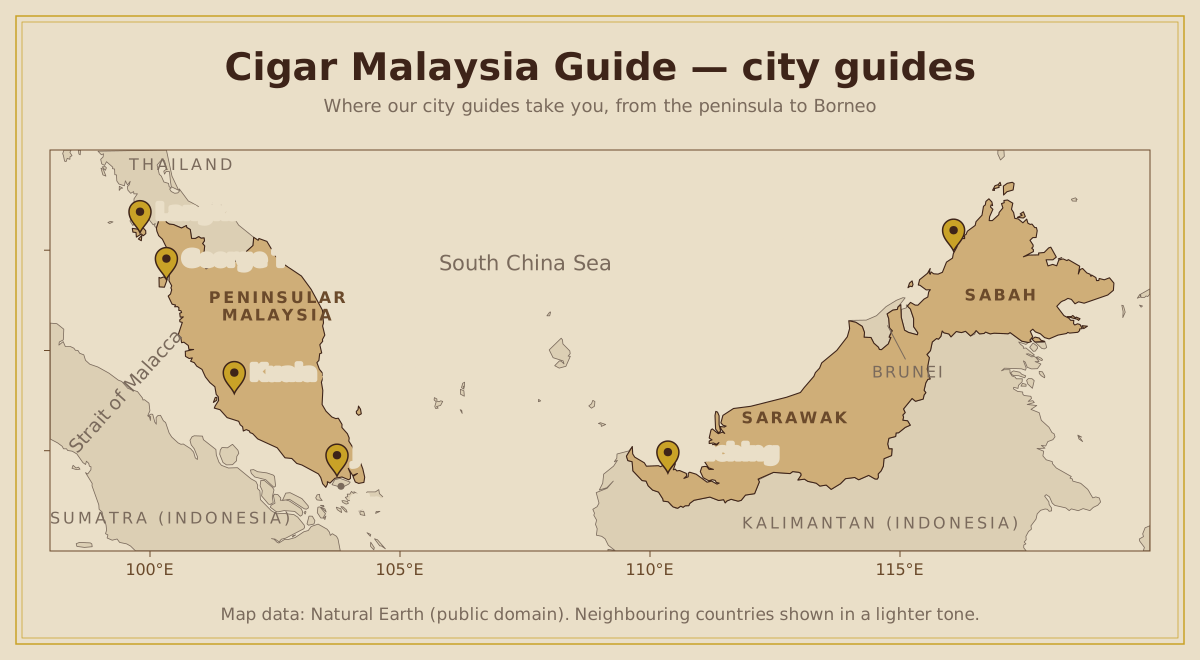
Malaysia’s cigar scene centres on the Klang Valley, with smaller pockets elsewhere. We list venues as facts, not endorsements. Status can change quickly, so check before you visit.
Kuala Lumpur and the Klang Valley
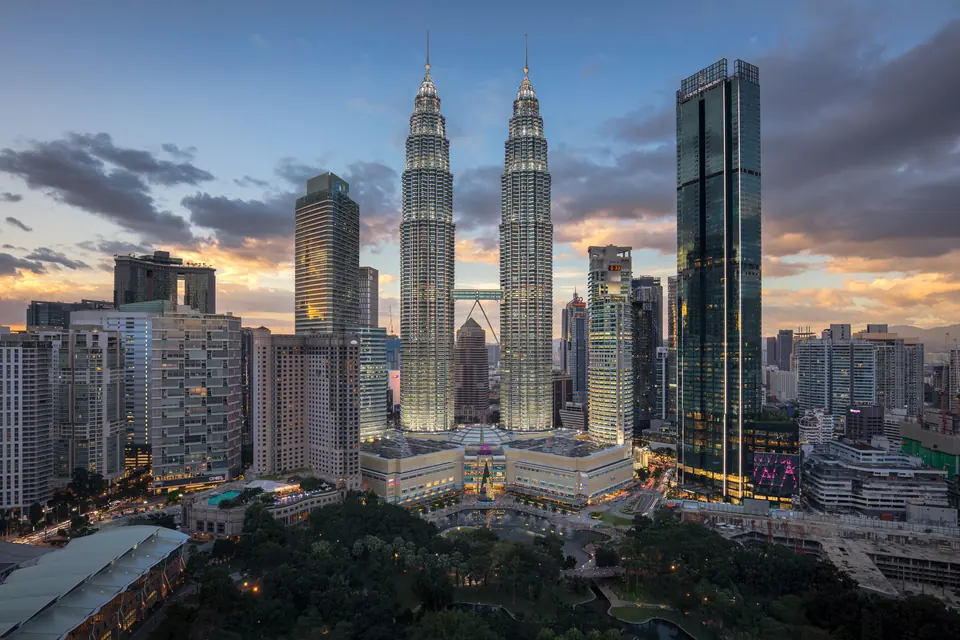
The capital has by far the most venues. La Casa del Habano Kuala Lumpur, at the Mandarin Oriental, is the best-known name. Marini’s on 57, at Petronas Tower 3, has a cigar and whisky lounge and has hosted the Malaysian round of the Cigar Smoking World Championship. Cohiba Atmosphere, a three-storey Habanos lounge, sits in Kota Damansara, Petaling Jaya. Across the Klang Valley, you will also find specialist stores in shopping centres, members’ lounges and hotel bars. Our Kuala Lumpur cigar guide lists them with their verification status.
Penang
Penang is a special case. The whole of George Town’s World Heritage Site is a non-smoking zone, open areas included. We have not verified any dedicated cigar lounge on the island. Our Penang guide explains what we found and where the rules bite.
Johor Bahru
Johor Bahru sits across the Causeway from Singapore, so many visitors come through it. The Trinidad Cigar Club opened in April 2025 inside a hotel at Puteri Harbour, Iskandar Puteri. Our Johor Bahru guide covers the area and the cross-border rules.
Langkawi
Many people still think of Langkawi as a duty-free tobacco island. It no longer is. Tobacco lost its duty exemption there on 1 January 2021. A few cigar venues have been reported on the island. Our Langkawi guide explains what duty-free still means today.
Kota Kinabalu and Kuching
In Sabah, The Club at the Hilton Kota Kinabalu hosted the first Borneo qualifier of the Cigar Smoking World Championship in 2025. Kota Kinabalu airport also has listed smoking areas. We found no verified venue in Kuching. Our guide to Kota Kinabalu and Kuching covers both cities and Borneo’s tobacco past.
Cigar culture in Malaysia
Malaysia’s cigar story starts in Borneo. In the 1880s, North Borneo, today’s Sabah, grew tobacco for cigar wrappers. The first shipments reached London and Amsterdam in 1884, and the leaf drew comparisons with Sumatran wrapper.
For a time, tobacco was central to the territory’s economy. According to the Daily Express, it made up about 30% of North Borneo’s exports in 1890 and about half in 1891. The industry then declined after the 1890 McKinley Tariff in the United States. The academic study by John and Jackson tells the story in detail.
Today the culture is smaller and mostly urban. The Malay word for cigar is cerut; Kamus Dewan also lists cerutu and serutu, and mencerut means to smoke a cigar. Malaysia has been on the Cigar Smoking World Championship circuit since 2019. The contest rewards whoever can make one cigar last the longest. Since 2025 there have been two qualifiers, one in Kuala Lumpur and one in Borneo, and one KL smoker has won the local title four times.
Pairings have a local flavour too. A strong kopi or a cup of teh tarik suits a morning or afternoon cigar, especially a mild one. In the evening, many smokers reach for whisky, rum or cognac instead. In our heat, a long glass of cold water alongside is just as wise.
Our article on cigar culture in Malaysia covers clubs, events and local pairings, such as kopi or a dram of whisky. For the wider region, see cigars in Southeast Asia.
Etiquette for smoking cigars in Malaysia
The law sets the floor. Good manners go further, especially with cigar smoke, which is dense and lingers.
- Ask first. At a friend’s home or a mixed gathering, check before you light up.
- Keep your distance. Stay well away from children, food and open windows.
- Respect Ramadan. During fasting hours, avoid smoking where people who are fasting can see or smell it.
- Skip it on hazy days. The air is already poor, and nobody needs more smoke.
- Follow the venue. Lounges set their own rules on cutting, sharing and outside cigars.
Our guide to cigar etiquette has more detail for lounges and social occasions.
Health: the facts
No cigar is safe. The WHO says tobacco kills more than 7 million people a year, and that “there is no safe level of exposure”. Cigar smoking causes cancers of the mouth, throat, oesophagus and lung, even in people who do not inhale. According to the US National Cancer Institute, a single cigar can potentially provide as much nicotine as a pack of cigarettes.
Second-hand smoke matters too. The WHO estimates that over 1.6 million of those deaths each year are among non-smokers exposed to other people’s smoke. The US FDA adds that cigars are “not a safe alternative to cigarettes”.
In Malaysia, 19.0% of adults aged 15 and over smoked tobacco in 2023, according to the GATS Malaysia 2023 fact sheet. The survey gave no separate figure for cigars. The Health Minister has said tobacco causes about 27,000 deaths a year in Malaysia.
If you want to cut down or stop, MOH’s mQuit programme is free. You can register at jomquit.moh.gov.my, the same address printed on cigar packs. Our page on cigar health risks explains the evidence in full.
Common myths, corrected
A lot of outdated advice still circulates about cigars in Malaysia. Here are the myths we hear most, checked against the law.
- “Langkawi is duty-free for cigars.” Not since 1 January 2021. The tobacco exemption ended on all four duty-free islands, and the 2027 Budget change excludes tobacco too.
- “You can bring in 225 g of tobacco.” That figure is out of date. The current Customs traveller exemption excludes tobacco products entirely.
- “Outdoor tables are fine.” They are not. The 3 m rule around food tables and chairs applies outdoors as well as indoors.
- “Cigar lounges have a smoking licence.” We found no such licence in Act 852 or its Order. Lounges operate, but their legal basis is not set out in any official source.
- “Cuban cigars are banned.” That is a US rule. In Malaysia, Cuban cigars are legal.
- “Cigars are safer than cigarettes.” They are not. Cigar smoke is at least as toxic, and not inhaling does not protect your mouth and throat.
If you hear a claim that sounds too convenient, check it against our guides or the official source.
Panduan dalam Bahasa Melayu
Prefer to read in Malay? Our panduan cerut dalam Bahasa Melayu covers the law, prices and the basics of rokok cerut for Malay-speaking readers.
Where to start
If you are new, begin with our cigars for beginners guide, then read up on Act 852 and where to smoke. Travellers should read bringing cigars into Malaysia before they fly. Finally, whatever you smoke, protect it from the climate with our guide on how to store cigars. Understanding cigars in Malaysia starts with these few pages.
Frequently asked questions
Is it legal to smoke cigars in Malaysia?
Yes, for adults aged 18 and over, but not everywhere. Act 852 and its Non-Smoking Order ban smoking in 28 categories of place, including eating places, air-conditioned shops, workplaces and parks. See where to smoke cigars in Malaysia.
What is the legal age for cigars in Malaysia?
18. Act 852 defines anyone under 18 as a minor. Selling to a minor is an offence, and a minor who buys or smokes also commits an offence.
Are Cuban cigars legal in Malaysia?
Yes. Malaysia has no embargo on Cuban goods, and Habanos reach the country through The Pacific Cigar Company, the official distributor for Asia-Pacific. They follow the same Act 852 rules as other cigars.
Which cigar brands are found in Malaysia?
Both Cuban and New World brands. Habanos such as Cohiba and Montecristo come through the official distributor, while independent importers bring in cigars from Nicaragua, the Dominican Republic and Honduras. Our brands section profiles the major names.
Can I buy cigars online in Malaysia?
No. Regulation 3 of the Control of Sale Regulations 2024 bans the online sale of tobacco products in Malaysia. Cigars are sold in physical premises, under strict display, labelling and age rules.
How many cigars can I bring into Malaysia?
There is no duty-free amount. The Customs traveller exemption excludes tobacco products, so you should declare any cigars at the Red Lane and pay the duty due. See bringing cigars into Malaysia.
Sources
- Control of Smoking Products for Public Health Act 2024 (Act 852)
- Attorney General's Chambers – Laws of Malaysia (official text)
- P.U.(A) 257/2024 – Declaration of Non-Smoking Area or Place Order 2024
- P.U.(A) 260/2024 – Control of Sale Regulations 2024
- Royal Malaysian Customs Department – Traveler's Guide
- Royal Malaysian Customs Department – Excise Duties Order 2025, P.U.(A) 389/2025
- MetMalaysia – Malaysia's Climate
- WHO – Tobacco fact sheet (updated 26 Jun 2026)
- GATS Malaysia 2023 fact sheet (MOH/WHO)
- Pacific Cigar Company – Our locations
- Cigar Journal – Habanos launches San Cristóbal de La Habana Harimau Malaya
- John & Jackson, The Tobacco Industry of North Borneo, Journal of Southeast Asian Studies (1973)