 Score 93 out of 100
Cuban review
Cohiba Robusto Review
Cuba’s most famous robusto: rich, refined and grassy-sweet, at a price that demands a careful buyer.
Cigar Malaysia Guide is an independent editorial site about cigars for adults aged 18 and over. We do not sell tobacco.
No, take me to the Ministry of HealthSmoking causes cancer, heart disease and other serious illness.
Reviews
Twelve well-known cigars assessed against one open scorecard, with no samples, ads or affiliate links.
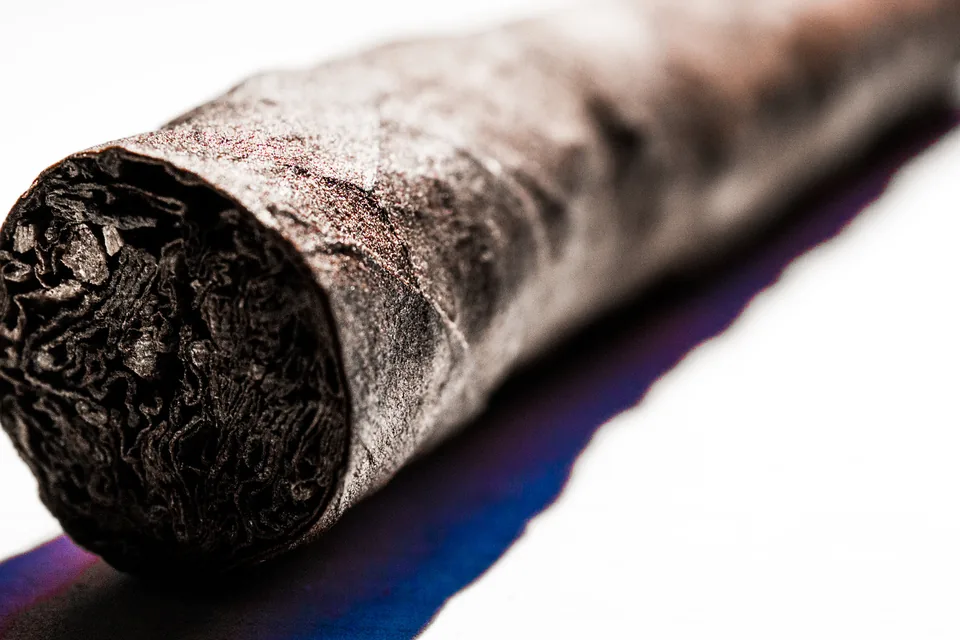
Photo: Frettie (Czech Wikipedia) / Public Domain
Our cigar reviews are structured critical assessments, not adverts. Each one scores a single, named cigar against the same open scorecard. It also explains how the cigar is made and what most smokers can expect from it. This page sets out exactly how we score, so you can judge our judgements.
Every review rates five things out of 10. Then we combine them into an overall score out of 100. The weighting reflects what matters most when you actually smoke. Flavour carries the most weight, because a perfectly built cigar that tastes flat is still a dull cigar.
| Criterion | Weight | What it covers |
|---|---|---|
| Construction | 20% | Roll, firmness, wrapper quality, cap, soft spots |
| Draw | 15% | Resistance when you puff, and how even it stays |
| Burn | 15% | Burn line, relights, ash, canoeing or tunnelling |
| Flavour | 30% | Quality, richness and balance of the taste |
| Complexity | 20% | How the profile layers and changes over the smoke |
The maths is simple. We multiply each sub-score by its weight, add them up, multiply by 10 and round to the nearest whole number. For example, scores of 9, 9, 9, 9 and 9 give 90. A cigar with a 9.5 for flavour and 8.5 for burn lands a little differently. We allow half points, so the sub-scores can show small differences.
Construction is the build. We look at how evenly the filler is packed, how neatly the cap sits and whether the wrapper is smooth and intact. Soft spots, lumps and cracked wrappers all lose points.
Draw is how much air passes when you puff. A good draw feels like sipping through a straw with slight resistance. Too tight, and you work hard for little smoke. Too loose, and the cigar burns hot.
Burn covers the burn line and the ash. A sharp, even line with a firm ash scores well. On the other hand, constant touch-ups, canoeing and early relights do not.
Flavour is the quality of the taste itself. We ask whether the notes are clean, rich and balanced, and whether the strength suits the blend.
Complexity asks whether the cigar changes. A complex cigar shows new notes across its thirds and has a long finish. Our guide on how to taste a cigar explains this vocabulary in more detail.
| Score | Band | In plain words |
|---|---|---|
| 95–100 | Classic | A benchmark of its style |
| 90–94 | Outstanding | Superior in almost every way |
| 85–89 | Very good | Well made, with real character |
| 80–84 | Good | Solid, with a few weaknesses |
| 70–79 | Fair | Noticeable flaws |
| Below 70 | Poor | Hard to recommend |
In short, the 80s mean very good and the 90s mean outstanding. Because we chose famous, long-running cigars, most of our scores sit between 86 and 95. Still, we keep them spread out. Two cigars in the same band are not equal, and the sub-scores show why.
Before we score anything, we check the facts. For Cuban cigars, we confirm the commercial name and the factory name, or vitola de galera, against Habanos S.A. data. We also cross-check length in inches and millimetres and the ring gauge. For non-Cuban cigars, we use the maker’s own published blend: wrapper, binder and filler origins. Where a source disagrees, we follow the maker and note the difference.
We also cross-reference respected references such as Cigar Aficionado’s Top 25 archive and halfwheel for release dates and sizes.
We do not invent tasting sessions. Instead, each profile combines three things. First, the cigar’s documented characteristics, such as tobacco, size and wrapper. Second, published tasting reports from several reputable sources. Third, our editorial team’s evaluation framework, the scorecard above. As a result, the reviews describe what most smokers report and what you should expect, with strengths and weaknesses side by side.
Our independence
We take no free samples in exchange for coverage. We carry no advertising, use no affiliate links and sell nothing. Malaysia’s Act 852 bans tobacco advertising, promotion and online sale, so our reviews are criticism, not endorsement. See our editorial policy and the Act 852 explainer.
A review describes a cigar in good condition. However, the cigar you meet in Malaysia may have travelled a long way. Availability varies between cities, and so does storage quality. A cigar kept in a warm shop without a proper humidor can taste harsh and burn badly.
Humidity matters most. Outdoor air here often sits between 70 and 90% RH, while air-conditioned rooms can be much drier. Most cigars smoke best at about 65–69% RH. Our guide to the best humidity for cigars explains how to hold that level. If you own a Cuban cigar, check its seals too, since our counterfeit cigars guide shows the warning signs.
Finally, no score makes a cigar safe. Smoking any cigar carries real health risks, and the law limits where you can smoke.
Below are our twelve current cigar reviews: six Cuban and six from Nicaragua and the Dominican Republic. Each links to its brand profile and origin guide, so you can read the wider story behind the band.
Score 93 out of 100Cuban review
Cuba’s most famous robusto: rich, refined and grassy-sweet, at a price that demands a careful buyer.
 Score 88 out of 100
Cuban review
The classic Cuban petit corona: cedar, cocoa and toast in under an hour, with some box-to-box variation.
 Score 89 out of 100
Cuban review
The cigar named after Winston Churchill: long, elegant and medium-bodied, with cedar, cream and gentle spice.
 Score 90 out of 100
Cuban review
The world’s most popular Cuban robusto: earthy, spicy and full of flavour, with occasional rough edges.
 Score 91 out of 100
Cuban review
Cuba’s creamy, elegant robusto: delicate rather than mild, with real depth for a gentle cigar.
 Score 86 out of 100
Cuban review
A short, mild-to-medium Cuban for a 20 to 30-minute break: creamy and pleasant, but simple.
Score 95 out of 100Nicaraguan review
A box-pressed Nicaraguan benchmark: cocoa, coffee and sweet spice with outstanding balance.
 Score 89 out of 100
Dominican review
A tiny Dominican perfecto with a Cameroon wrapper: sweet, spicy and remarkably well made for its size.
 Score 87 out of 100
Dominican review
A refined Dominican corona: creamy, nutty and flawlessly made, but mild and costly for what it offers.
 Score 92 out of 100
Nicaraguan review
Cigar Aficionado’s 2014 Cigar of the Year: a pressed Nicaraguan figurado with leather, coffee and caramel.
 Score 94 out of 100
Nicaraguan review
Cigar Aficionado’s 2015 Cigar of the Year: a dark, box-pressed Nicaraguan torpedo with chocolate, leather and pepper.
Score 91 out of 100Nicaraguan review
Drew Estate’s dark broadleaf cigar: dense earth, espresso and chocolate, with huge smoke and real strength.