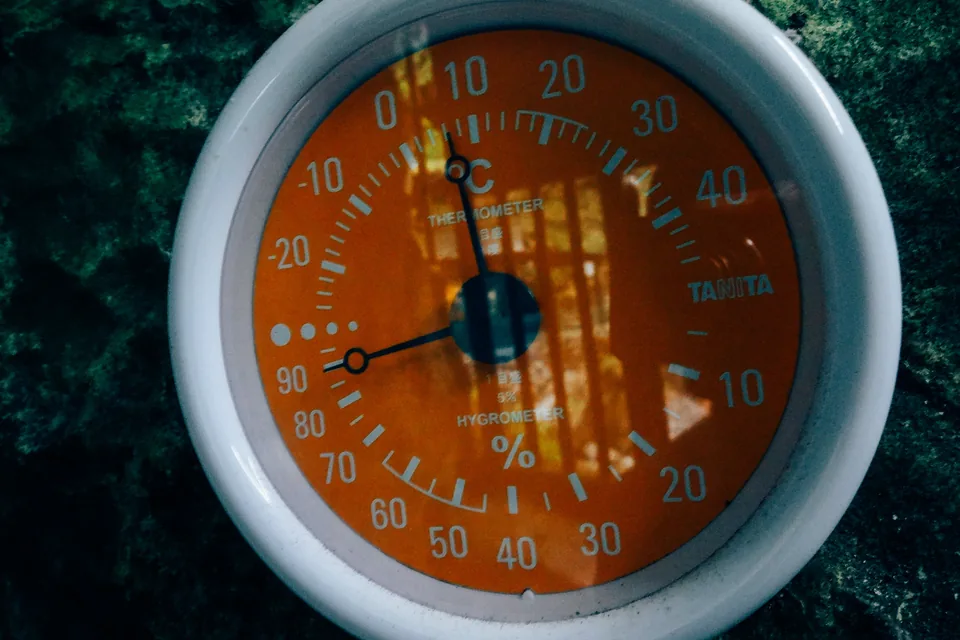
A cigar hygrometer is the small gauge that tells you the relative humidity inside your humidor or tupperdor. Without one, you are guessing. And in Malaysia, guessing is risky. The air outside often sits at 70–90% RH, while an air-conditioned room can fall to around 45–60%. A calibrated gauge shows you which of those your cigars are really feeling.
What a hygrometer measures
A hygrometer measures relative humidity (RH). RH is the amount of water vapour in the air compared with the most it could hold at that temperature. So 70% RH means the air holds 70% of its maximum.
Temperature changes the picture. Warm air can hold more moisture than cool air. That is why the same box can read differently when the room heats up or the air-con kicks in. For cigars, most smokers aim for 65–70% RH at about 18–21 °C. Our guide to the best humidity for cigars explains the target in more detail.
Analogue vs digital
There are two main types. Both can work, but they behave quite differently.
| Analogue (dial) | Digital | |
|---|---|---|
| How it works | A coil or hair strip moves a needle as it absorbs moisture | An electronic sensor reads RH and shows a number |
| Accuracy | Often drifts by several points | Usually closer, within the maker’s stated tolerance |
| Adjustment | Small screw on the back on many models | Button or offset setting on some models |
| Temperature | Rarely shown | Usually shown |
| Power | None | Battery |
| Looks | Classic, suits a wooden box | Plain, but easy to read |
| Extras | None | Some log highs and lows or send readings to a phone |
Analogue dials look good on a wooden lid. However, many low-cost dials are slow to respond and drift over time. Digital units cost a little more but are easier to trust. Also, most show temperature, which matters a lot in a Malaysian home.
Accuracy in practice
No hygrometer is perfect. Most makers quote a tolerance of a few percentage points, and cheaper sensors can wander further. A gauge that reads 5 points high could hide a box that is drying out. Equally, one that reads low could hide a box that is growing mould.
That is why calibration matters more than the label. A modest digital cigar hygrometer that you have tested is more useful than an expensive dial you have not.
How to calibrate a cigar hygrometer: the salt test
The salt test is the classic method. It relies on a well-known fact of chemistry. Damp table salt in a sealed space holds the air at about 75% RH at room temperature. The US National Bureau of Standards measured this value at 75.3% at 25 °C, and it barely changes across normal room temperatures.
- Fill a bottle cap with salt. Use a plastic bottle cap or small dish, about three-quarters full of plain table salt.
- Dampen the salt. Add a few drops of distilled water and stir. It should look like wet sand, not salty water.
- Seal it with the hygrometer. Put the cap and the gauge in a zip-lock bag or airtight box. Keep them apart, so salt never touches the sensor.
- Wait at a steady temperature. Leave the bag alone for at least 12 hours, ideally up to 24. Keep it out of the sun and away from air-con vents.
- Read without opening. Read the gauge through the bag. An accurate hygrometer shows about 75%.
- Adjust or note the offset. If your gauge has an adjustment, set it to 75%. Otherwise, write down the difference on a sticker and apply it every time.
For example, if your gauge reads 71% in the salt test, it reads 4 points low. So a later reading of 66% in the humidor really means about 70%.
Malaysia tip
Run the test in a room with a steady temperature. An air-conditioned room that cycles on and off overnight can nudge the result. A cupboard on an inside wall often works better.
Calibrating with a 75% calibration pack
If you prefer a ready-made option, two-way humidity packs come in calibration versions. Boveda’s One-Step kit is a sealed bag with a 75% pack inside. You simply place the hygrometer in the bag, close it and wait.
According to Boveda, you should leave it for at least 24 hours at a room temperature between about 18 and 24 °C. Then read the gauge. If it shows 75%, it is accurate. If not, adjust it or note the offset, just as with the salt test. Boveda says you can reuse the kit within three months if you keep it sealed.
Both methods target 75%, so they give the same kind of answer. The salt test costs almost nothing, while the pack is tidier and harder to get wrong.
How often to calibrate
Calibrate a new gauge before you trust it. After that, every few months is a sensible routine. Boveda suggests every six months.
Also, test it again in any of these cases:
- It fell, got wet or sat near a humidifier pad.
- It reads oddly compared with how your cigars feel.
- You changed its battery and the reading jumped.
- The reading has not moved at all for weeks.
Where to place the hygrometer
Placement changes the reading, so put the gauge where it reflects the whole box.
- Keep it away from the humidifier. Readings right next to a pack or sponge run high.
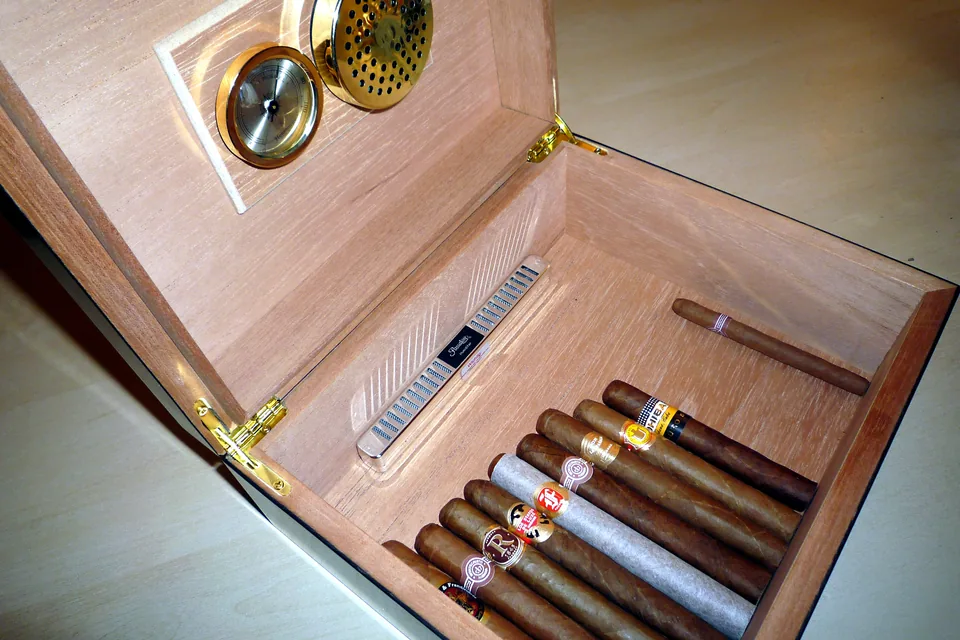
- Mount it near the top or middle. Moist air spreads unevenly, and the centre gives a fair average.
- Keep it out of the cigars’ way. It should not press against wrappers.
- Use two in a big cabinet. One near the top and one near the bottom shows any uneven spots.
After you open the lid, give the gauge time to settle. A reading taken right after a long look inside will be lower than the true figure.
Reading your results in Malaysia
Malaysian conditions can make a working gauge look broken. Here is how to read the numbers you are likely to see.
| Where the gauge is | Typical reading | What it means |
|---|---|---|
| Outdoors or a room without air-con | 70–90% RH, often above 28 °C | Too wet and too warm for open cigars |
| Air-conditioned room | Around 45–60% RH | Too dry for cigars left out |
| Sealed humidor or tupperdor | 65–70% RH | The target zone |
| Humidor reading above 72% | Too high | Risk of mould; check the humidifier |
| Humidor reading below 62% | Too low | Cigars drying; check the seal and humidifier |
So if your hygrometer reads 85% on the balcony, it is likely working fine. Only a salt test or calibration pack can prove its accuracy.
Above all, watch the temperature too. A box holding 69% RH at 28 °C is still at risk from mould and tobacco beetles. Our guide to cigar mould, plume and beetles explains why heat is the bigger threat here.
Choosing a cigar hygrometer
You do not need an expensive model. Look for a digital unit that shows both RH and temperature, fits your box and has a way to adjust or record an offset. A memory for highs and lows is useful, because it reveals swings while you are asleep or at work.
Next steps
A trusted gauge is the foundation of good storage. To put those readings to work, see our cigar humidor guide and our pillar guide on how to store cigars in the tropics. If your numbers keep drifting, our Boveda packs guide explains how two-way humidity control holds a box steady.
Frequently asked questions
How do I calibrate a cigar hygrometer?
Seal it in a zip-lock bag with a bottle cap of damp table salt for at least 12 hours, or with a 75% calibration pack for at least 24 hours. Then compare the reading with 75% and adjust the gauge or note the difference.
How accurate are cigar hygrometers?
It varies widely. Many low-cost analogue dials drift by several points, while good digital units hold closer to their stated tolerance. That is why calibration matters more than the price tag.
How often should I calibrate my hygrometer?
Calibrate it when it is new, then every few months. Boveda recommends every six months. Also re-test it if it gets wet, takes a knock or gives readings that do not match how your cigars feel.
Where should I put the hygrometer in a humidor?
Place it near the middle or top of the humidor, away from the humidifier. Readings next to a humidity pack or water source run high.
My hygrometer reads 85% outside the humidor. Is it broken?
Probably not. Malaysia’s outdoor air often sits at 70–90% RH. In an air-conditioned room, the same gauge may show 45–60%. Only a salt test or calibration pack tells you whether it is accurate.