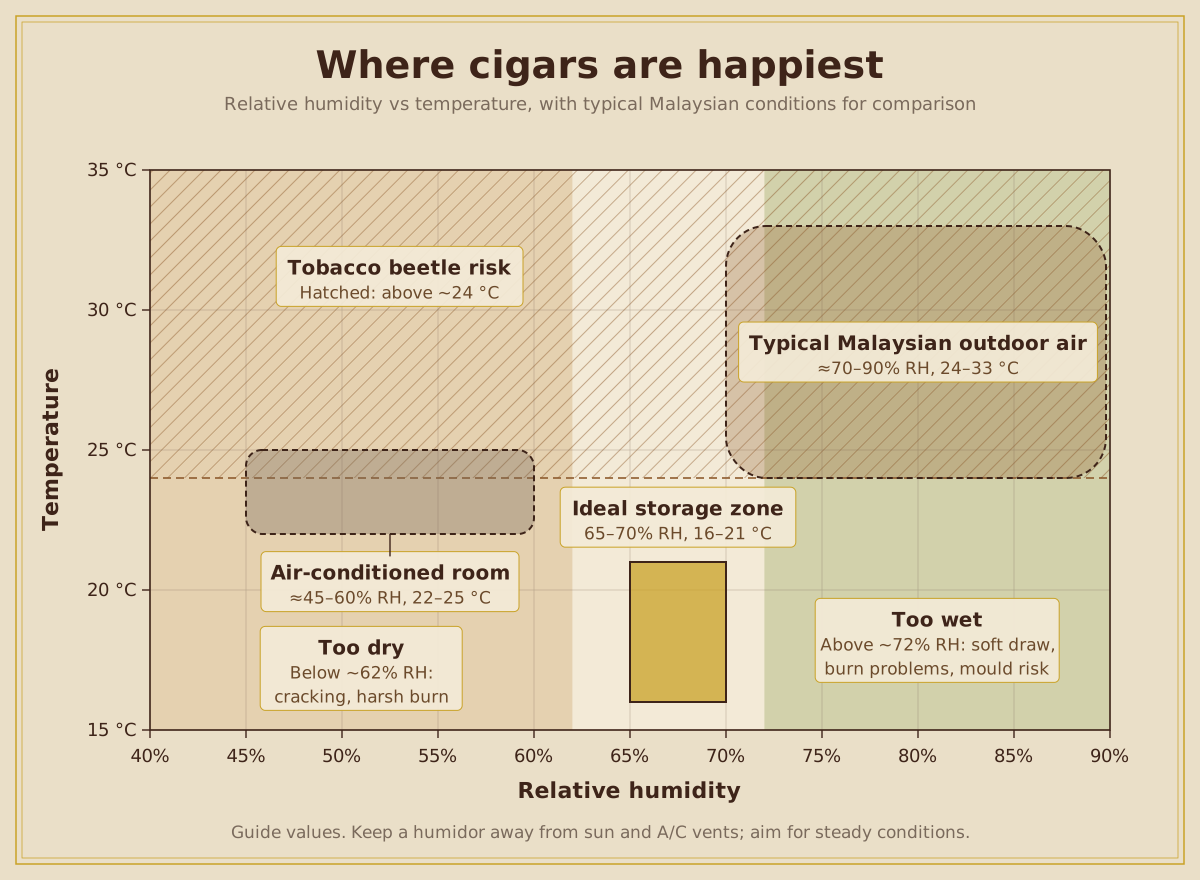
The best humidity for cigars is usually somewhere between 62% and 69% relative humidity, held steady at a cool temperature. That sounds simple, but the number on your hygrometer only tells half the story. In Malaysia, where the air outside is hot and damp and the air inside is cold and dry, temperature changes what that number means. This guide explains the science in plain words and helps you pick a setting.
What relative humidity actually means
Air always carries some invisible water vapour. Relative humidity, or RH, tells you how full the air is compared with the most it could hold at that temperature. So 50% RH means the air holds half of its maximum. At 100%, it is saturated, and water starts to condense as dew.
The key word is “relative”. Warm air can hold much more water than cool air. Therefore, the same amount of water gives a high RH in cool air and a lower RH in warm air.
Absolute vs relative humidity, simply
Absolute humidity is the actual weight of water in the air, measured in grams per cubic metre. Think of air as a cup. Warm air is a big cup, while cool air is a small one. Relative humidity is how full the cup is, not how much water it contains.
| Temperature | Most water air can hold | Water at 69% RH |
|---|---|---|
| 18 °C | about 15.4 g/m³ | about 10.6 g/m³ |
| 21 °C | about 18.3 g/m³ | about 12.6 g/m³ |
| 25 °C | about 23.0 g/m³ | about 15.9 g/m³ |
| 30 °C | about 30.4 g/m³ | about 21.0 g/m³ |
These are standard physics values, rounded. The point is clear, though: air at 30 °C and 69% RH carries roughly two-thirds more water than air at 21 °C and 69% RH.
Why 69% at 30 °C behaves differently
A cigar’s moisture content follows the RH around it quite closely. In theory, then, a cigar at 69% should feel similar at 21 °C and at 30 °C. In practice, warm storage causes three problems.
First, heat speeds up everything. Mould grows faster, oils evaporate faster and flavours change faster. Second, warmth wakes tobacco beetles. According to Texas A&M entomologists, they develop best between about 20 and 30 °C at 70–80% humidity, which describes a Malaysian room almost exactly.
Third, warm humid air is unstable. Imagine a box sealed at 30 °C and 69% RH. If you carry it into a room at 24 °C, the same water now fills a smaller “cup”. The RH inside would jump to around 90% if nothing absorbed it. The cedar and the cigars soak up much of that extra moisture, but they swell as they do. That is why swings, not just levels, cause split wrappers and mould.
The takeaway
Control temperature first. Once your storage sits at about 18–21 °C, the humidity number becomes reliable and easy to hold.
Malaysian climate: the numbers behind the problem
Malaysia’s climate is hot and humid all year. According to the Malaysian Meteorological Department, the yearly temperature range is small, under 2 °C in most places. Daily swings are larger, around 5–10 °C near the coast and 8–12 °C inland. Nights usually sit between 21 and 24 °C.
Humidity is high too. Monthly averages commonly sit around 80% or more, and daily maximums often pass 94%. In dry months, however, the daily minimum can fall to around 42%. MetMalaysia publishes long-term figures on the national data portal.
Then there is air-conditioning. An aircon unit cools the air and removes water at the same time, so indoor RH often drops to 45–60%. As a result, Malaysian cigars face two opposite threats: damp heat outdoors and dry cold indoors.
The best humidity for cigars: 62, 65, 69 or 72%
So what is the best humidity for cigars in practice? It depends on your taste, your cigars and your storage. Here is how the common settings compare.
| Setting | Feel and smoke | When it fits |
|---|---|---|
| 62% | Firm, dry to the touch. Burns easily and evenly, with sharp, clean flavour. | Tropical storage where mould is a worry; dense, tightly rolled cigars; smokers who dislike a soft draw. |
| 65% | Firm but springy. Easy burn, bright flavour. | A popular tropical choice. Good for ageing and for cigars that tend to burn unevenly. |
| 69% | Supple and oily. Full flavour, traditional feel. | Most humidors and tupperdors, in cool storage. The standard choice for most cigars. |
| 72% | Soft, moist. Rich but prone to tunnelling and a tight draw. | Leaky humidors in dry rooms, or a personal preference for certain Cubans. Rarely needed in Malaysia. |
Boveda, the best-known maker of humidity packs, names 69% as its most popular cigar setting. It suggests 65% for those who like a drier smoke and 72% for drafty boxes or dry places. It also notes that the actual reading often settles a few points below the pack’s rating. That gap is useful in the tropics, because a slightly drier box is a slightly safer box.
Does the cigar itself change the answer?
Somewhat, yes. Thick cigars with a large ring gauge hold more tobacco, so they tolerate a little extra moisture before the draw tightens. Thin cigars such as lanceros and petit coronas, by contrast, often smoke better a touch drier. Many smokers also keep Cuban cigars slightly drier than Nicaraguan or Dominican ones, since Cubans tend to be rolled more tightly.
Wrapper matters too. Thin, delicate wrappers like Connecticut shade can crack when too dry. Meanwhile, oily dark maduro wrappers often cope well at 65%. If one brand keeps burning badly, try it a few points drier before blaming the cigar.
Humidity packs and beads: what the numbers mean
You can hold humidity with a few kinds of passive device. Each one is set to a target RH.
- Two-way humidity packs. Sealed pouches of salt solution that add or absorb moisture to hold a set RH. They come in several cigar levels, commonly 65%, 69% and 72%. Our Boveda packs guide explains sizes and lifespan.
- Humidity beads. Silica-based beads that you charge with distilled water. They are commonly sold pre-set at around 65% or 70%. They suit tupperdors and coolidors well.
- Foam or sponge humidifiers. Old-style one-way devices. They only add moisture, so they can push a box too wet in Malaysia’s climate. Most tropical smokers avoid them.
Two rules apply to all of them. Use only one RH level per container, because mixed devices fight each other. And always use distilled water, never tap water, when recharging.
Troubleshooting: too wet
High humidity is the more dangerous mistake in a warm country. Look for these signs.
| Symptom | Likely cause | What to do |
|---|---|---|
| Cigar feels spongy when gently squeezed | RH above about 72% | Swap to a lower pack, such as 65%, or remove some humidity source |
| Tight draw, cigar goes out often | Too much moisture in the filler | Rest cigars at 62–65% for a week before smoking |
| Tunnelling or canoeing burn | Wet wrapper or filler | Lower RH; let a cigar sit out in aircon for 30 minutes before lighting |
| Wrapper splits as it swells | Rapid rise in humidity | Stabilise conditions; avoid moving boxes between hot and cold rooms |
| Fuzzy white, blue or green spots | Mould from high RH and warmth | Isolate at once and read our guide to mould and plume |
| Musty smell in the box | Early mould or damp wood | Air the box, check the hygrometer, lower RH |
Troubleshooting: too dry
Air-conditioned rooms make dry cigars common in Malaysia. These are the usual signs.
| Symptom | Likely cause | What to do |
|---|---|---|
| Cigar feels hard and crackles | RH below about 60% | Rehydrate slowly over two to four weeks |
| Wrapper cracks when cut or lit | Brittle leaf | Raise RH gradually; never mist with water |
| Burns hot, fast and harsh | Low moisture in the filler | Store at 65–69% for a few weeks |
| Flat, papery flavour | Oils and aroma lost over time | May not fully recover; rest and try again |
| Hygrometer keeps falling | Spent pack, failing seal or aircon draught | Recharge or replace, check the lid, move the box away from vents |
For the step-by-step rescue process, see our guide on how to store cigars, which covers rehydration in detail.
Measuring humidity properly
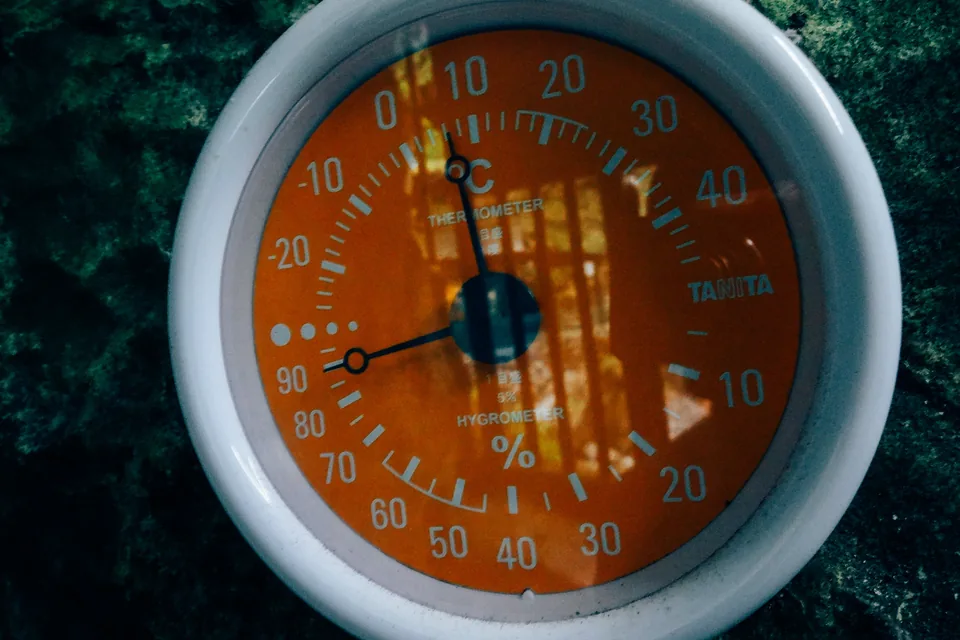
All of this depends on an accurate reading. A hygrometer is the gauge that shows RH, and good digital ones show temperature too. Calibrate it when new and every few months after that. Basic dial models can be several points off.
Read it with the lid closed, and look at the trend over a week rather than a single number. Our guide to cigar hygrometers explains how to calibrate one with a simple salt test.
Finally, remember that good storage keeps a cigar smoking well, but it does not make it any healthier. Our page on cigar health risks explains why.
Frequently asked questions
What is the best humidity for cigars?
For most cigars, 65–69% relative humidity at about 18–21 °C. Some smokers prefer 62–65% for a sharper burn, especially in the tropics. Very few cigars benefit from more than 72%.
Is 75% humidity too high for cigars?
For most cigars, yes. At 75% the wrapper feels spongy, the draw tightens and the burn becomes uneven. Mould risk also rises, especially in a warm Malaysian room.
Is 60% humidity too low for cigars?
It is on the dry side but not a disaster. Cigars at 60% burn fast and can taste sharp, and wrappers may crack when cut. Raise the humidity slowly towards 65% over a week or two.
Should I use 65% or 69% Boveda in Malaysia?
Both work. Choose 69% for a fuller, more traditional feel, or 65% for a drier, easier burn and a little extra safety against mould. See our Boveda packs guide for sizing.
Does air-conditioning dry out cigars?
Yes. Aircon removes moisture as it cools, so rooms often drop to 45–60% humidity. Cigars left out in an air-conditioned room can dry noticeably within days.