The Montecristo cigar is one of the most widely smoked Cuban brands, and for many people it is the first Habano they try. It began in Havana in 1935 and built its name on a short, numbered line of sizes. This profile covers its history, its best-known vitolas, its house style and its standing in Malaysia.
Two Montecristos: Cuba and the US
Before anything else, it helps to know that two brands share this name. The original is Cuban. After the revolution, the Cuban state took over the brand, and Habanos S.A. now sells it worldwide.
Meanwhile, the founding families left Cuba and later made Montecristo cigars in the Dominican Republic. Today Altadis U.S.A. sells that version in the US, using Dominican and other non-Cuban tobacco. In 2020 Imperial Brands sold Altadis U.S.A. and its 50% share of Habanos to companies backed by the same investor group. Even so, the two cigars remain separate products with different blends. This page covers the Cuban Montecristo.
History of the Montecristo cigar
The brand began in July 1935, when Alonso Menéndez launched it in Havana. Soon after, he went into partnership with José Manuel “Pepe” García. Their firm, Menéndez, García y Cía, bought the famous H. Upmann factory, and Montecristo production moved there. Habanos still traces the brand’s birth to that factory.
The name has a well-loved story behind it. Cuban factories employed a lector, a reader who read aloud to the rollers as they worked. According to Habanos, Dumas’ The Count of Monte Cristo was a favourite, and the rollers’ enthusiasm inspired the brand name. The crossed swords on the band nod to the same tale.
In 1960 the Cuban government nationalised the industry, so the founders left. Production in Cuba carried on, and the brand grew into one of the island’s biggest sellers.
How Montecristo is made
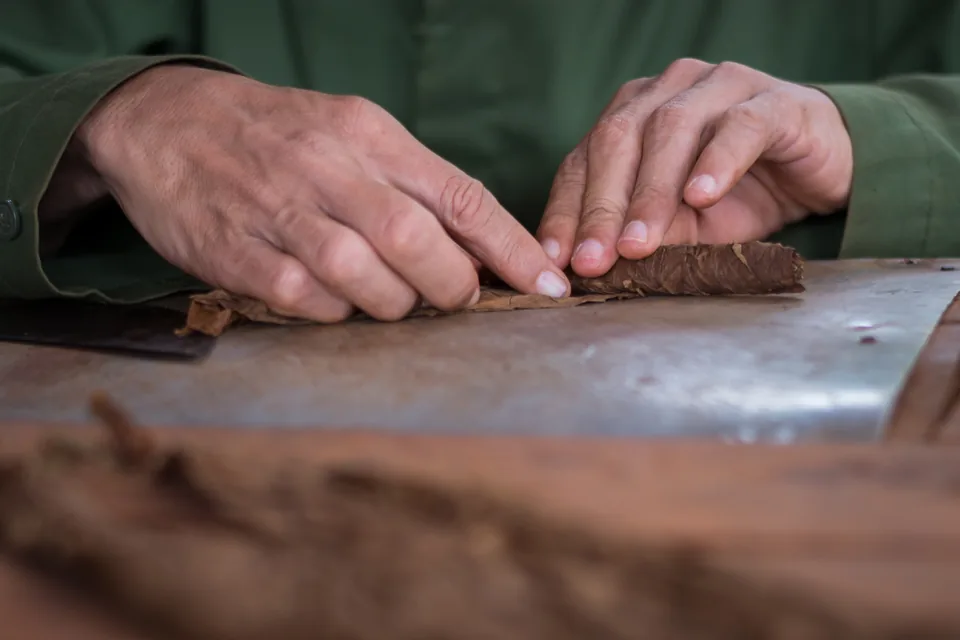
Every Cuban Montecristo cigar with long filler is rolled totalmente a mano, totally by hand. The leaf comes from the Vuelta Abajo, the most prized growing zone in Pinar del Río. As with most Habanos, the factory that rolls a given size can change over time, so Habanos rarely ties the brand to one building today.
The numbered line and other well-known sizes
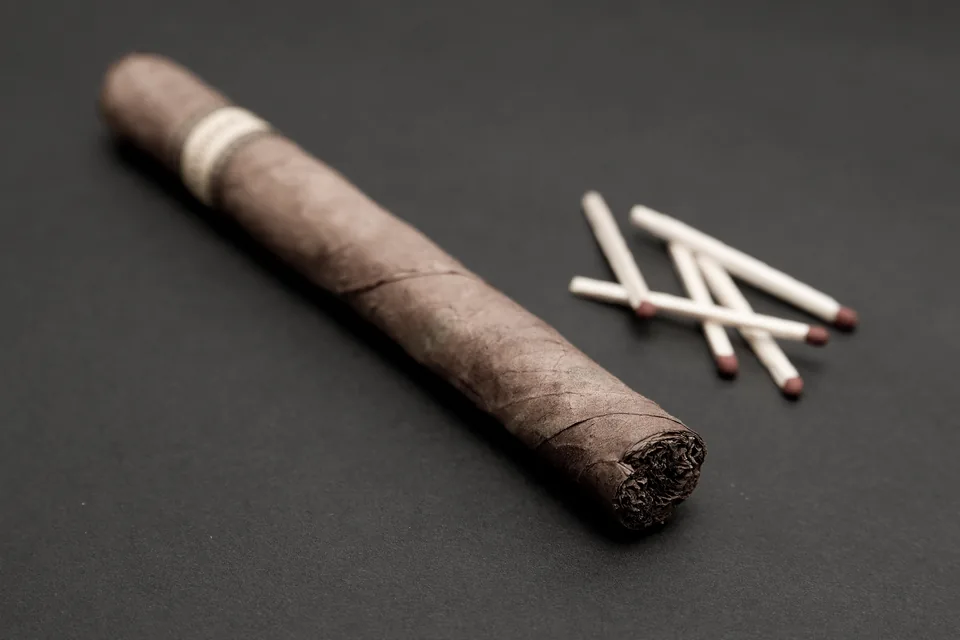
The original range had five sizes, numbered 1 to 5. Later, the brand added the thicker Edmundo in 2004, the Petit Edmundo in 2007 and the Double Edmundo in 2013. Next came the lighter Línea Open in 2009, and the Línea 1935 (Maltés, Dumas and Leyenda) followed later.
| Cigar | Length × ring gauge | Shape |
|---|---|---|
| No. 1 | 165 mm × 42 | Long corona |
| No. 2 | 156 mm × 52 | Torpedo (pirámide) |
| No. 4 | 129 mm × 42 | Petit corona |
| No. 5 | 102 mm × 40 | Short petit corona |
| Edmundo | 135 mm × 52 | Robusto extra |
| Petit Edmundo | 110 mm × 52 | Short robusto |
| Double Edmundo | 155 mm × 50 | Toro |
The No. 4 is the one most people meet first. Habanos calls it “the best-selling Habano in the world”. For a full assessment, see our Montecristo No. 4 review. Our cigar sizes guide explains what the ring gauge numbers mean.
House style and flavour
Broadly, a Cuban Montecristo is medium to full, with Habanos rating its main lines in that band. Smokers commonly describe cedar, cocoa, coffee, toasted nuts and a light spice, with a slightly tangy, earthy edge. The Open line is milder and rated medium.
In practice, the style suits a first Cuban cigar or a morning smoke. It is rich enough to taste clearly Cuban, yet rarely harsh. Of course, age and storage change any cigar, so treat these notes as a guide.
Strengths and criticisms
The strengths are easy to list. The Montecristo cigar has a recognisable, balanced profile, a wide spread of sizes and decades of history. As a result, it is often the reference point for describing other Cuban cigars.
However, the brand faces familiar complaints. Because it is made in such large numbers, many smokers report uneven quality from box to box. Some find the No. 4 tight-drawing or quick to overheat if smoked fast. Its fame also makes it a common target for fakes.
Montecristo in Malaysia
In Malaysia, as elsewhere outside the US, the Montecristo you will see is the Cuban one. Habanos cigars come in through The Pacific Cigar Company, the official Habanos distributor for the Asia-Pacific region. In addition, real boxes carry the Habanos warranty seal, and our guide to counterfeit cigars shows what to check.
Malaysia’s Act 852 also limits how tobacco is advertised and sold, including a ban on online sales. Our page on Act 852 and cigar law sets out the rules. Finally, keep cigars away from both damp terraces and dry air-conditioning, and read our page on cigar health risks, since no cigar is safe.
Where to read more
- Cuban cigars: how Habanos are grown, made and graded
- H. Upmann: the brand whose factory gave Montecristo its start
- Cuban cigar history: nationalisation and the exile brands
- Cigar brands: the full directory of profiles
Frequently asked questions
Where are Montecristo cigars made?
Cuban Montecristos are made in Havana from Vuelta Abajo tobacco and sold worldwide by Habanos S.A. The Montecristo sold in the US is a different cigar, made in the Dominican Republic for Altadis U.S.A.
What is the most popular Montecristo?
The No. 4, a petit corona of 129 mm by 42 ring gauge. Habanos describes it as the best-selling Habano in the world. The No. 2 torpedo is the other famous size.
Why is it called Montecristo?
The name comes from Alexandre Dumas’ novel The Count of Monte Cristo. According to Habanos, the factory reader read it aloud to the rollers, and it became a favourite.
Is Montecristo a good first Cuban cigar?
Many smokers start with a Montecristo No. 4 or an Open line cigar, because they are medium in strength and widely known. Our guide to cigars for beginners covers what else to consider.