The history of cigars begins long before anyone used the word. People in the Americas were smoking tobacco rolled in leaves centuries before Columbus sailed. From there, the habit crossed the Atlantic, built great factories in Seville and Havana, and travelled the world. This article traces the history of cigars from Maya temples to the cigar boom of the 1990s.
Before Columbus: the Maya and the Taíno
Tobacco is native to the Americas, and people there used it for a very long time. The Maya of Central America left some of the clearest early evidence. At Uaxactun, in today’s Guatemala, a pottery vessel dated before the 11th century shows a Maya man smoking a roll of tobacco leaves tied with string. It is often called the earliest picture of something like a cigar.
Other Maya art shows gods and rulers smoking. For instance, a relief at Palenque in Mexico depicts the deity known as God L with a smoking roll. Chemistry adds to the picture. In 2012, researchers reported traces of nicotine inside a Maya flask about 1,300 years old, as NBC News reported.
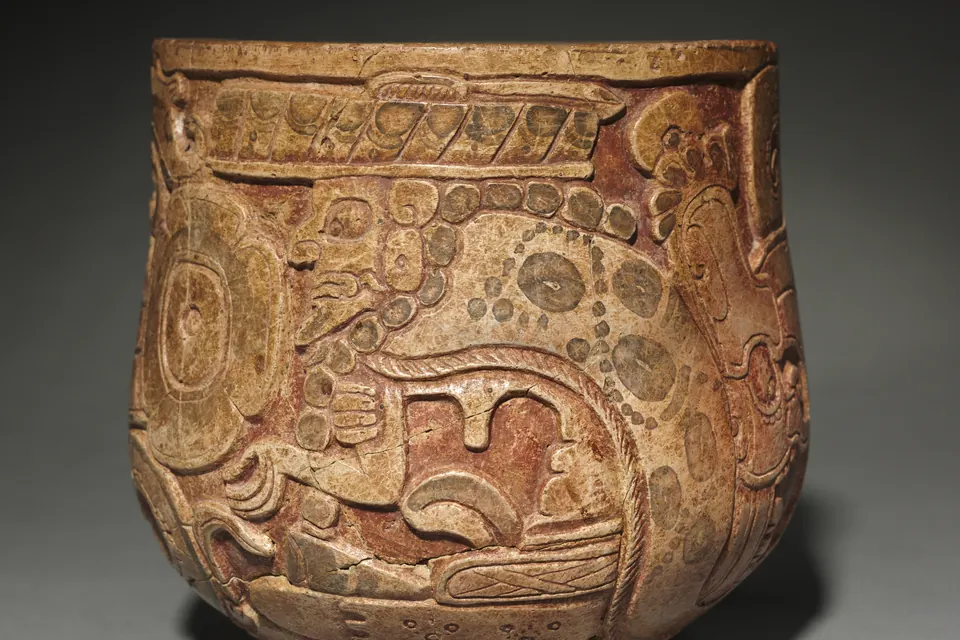
For the Maya, smoke was sacred. It played a part in ritual, healing and offerings to the gods. In the Caribbean, the Taíno people also smoked rolled tobacco. Some sources say the Taíno word for it was cohiba, a name that a famous Cuban brand later borrowed.
1492: Europeans meet the cigar
In late October 1492, Columbus reached Cuba. Thinking he might be near the court of China, he sent two men inland. They were Rodrigo de Jerez, a sailor, and Luis de Torres, an interpreter who spoke several languages.
In early November, the two men came back with an unusual report. They had seen local people carrying burning bundles of dried leaves rolled in a larger leaf. The people lit one end and drew the smoke in through the other. According to the traditional account, Jerez took up the habit himself.
A popular story says that, back in Spain, the Inquisition jailed Jerez for his “sinful” smoking. It is told in almost every cigar book. Even so, it rests on thin evidence, so treat it as legend rather than fact.
Spain and the Seville factories
Spain soon carried tobacco home. At first it was a curiosity, then a medicine, and finally a pleasure. Because Spain controlled Cuba and much of the tobacco trade, it also took control of making cigars.
Seville became the centre. In the 16th and 17th centuries, small tobacco workshops grew up across the city. Later, the Crown gathered them into one huge building. The Royal Tobacco Factory went up between 1728 and 1771 and was one of the largest buildings in Spain. Thousands of workers rolled cigars there, many of them women. Today the building houses part of the University of Seville.
For a long time, Spain kept tight state control over tobacco. In Cuba, that meant a royal monopoly, the Estanco, from 1717. Our article on cuban cigar history explains how it worked and why farmers rebelled.
The cigar spreads across Europe
Through the 17th and 18th centuries, most Europeans who used tobacco smoked a pipe, chewed it or took snuff. Cigars stayed largely Spanish. That changed with war.
During the Peninsular War of 1808 to 1814, British and French soldiers fought in Spain. Many picked up the local habit of smoking cigars. After the war, returning veterans made cigars fashionable at home. In Britain, cigar production began around 1820, and the habit spread through clubs and smoking rooms.
By the mid-19th century, cigars had become a symbol of success across Europe and the United States. Meanwhile, Germany and the Netherlands built large cigar industries of their own, often using leaf from the Dutch East Indies. Our article on cigars in Southeast Asia tells that part of the story.
The 19th century: Havana’s golden age
The 1800s turned Havana into the world’s most famous cigar city. In 1817, Spain agreed to end its Cuban tobacco monopoly, and private factories multiplied. Many of the great names date from this period.
| Brand | Founded | Founder |
|---|---|---|
| H. Upmann | 1844 | Herman Upmann, a German banker |
| Partagás | 1845 | Jaime Partagás |
| Hoyo de Monterrey | 1865 | José Gener |
| Romeo y Julieta | 1875 | Inocencio Álvarez and Manín García |
Our brand pages cover the stories behind H. Upmann and Partagás in more depth.
Cigar bands and boxes
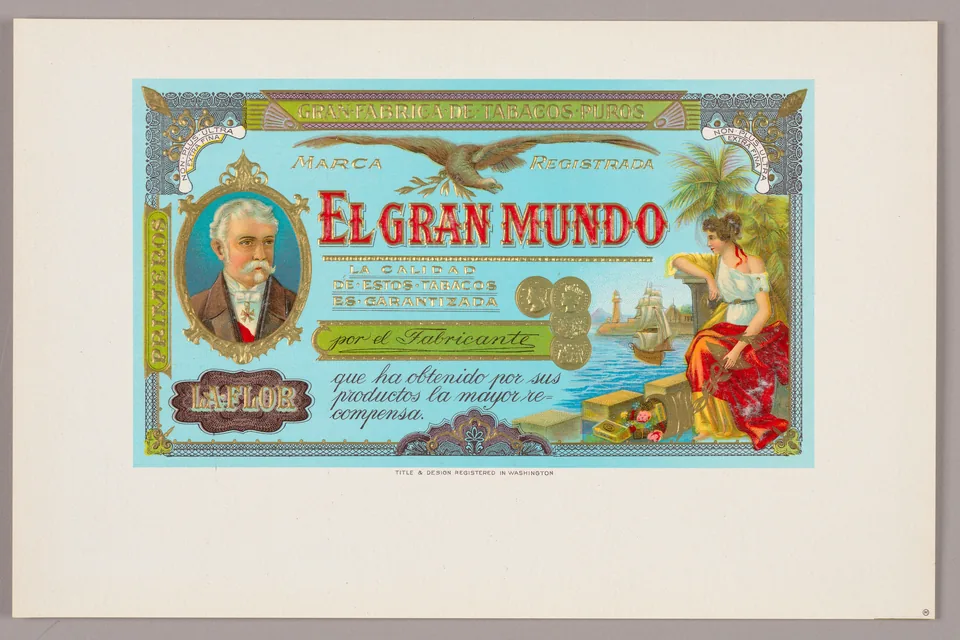
As Havana cigars grew famous, fakes followed. European dealers sold cheaper cigars under Cuban names. In response, makers began to mark their work. Historians usually credit Gustave Bock, a European-born maker in Havana, with the first paper cigar band, though sources give dates from the 1830s to the 1850s. Within a few decades, banding exported cigars had become standard, as Cigar Aficionado explains. Decorated cedar boxes and printed labels followed.
The lector
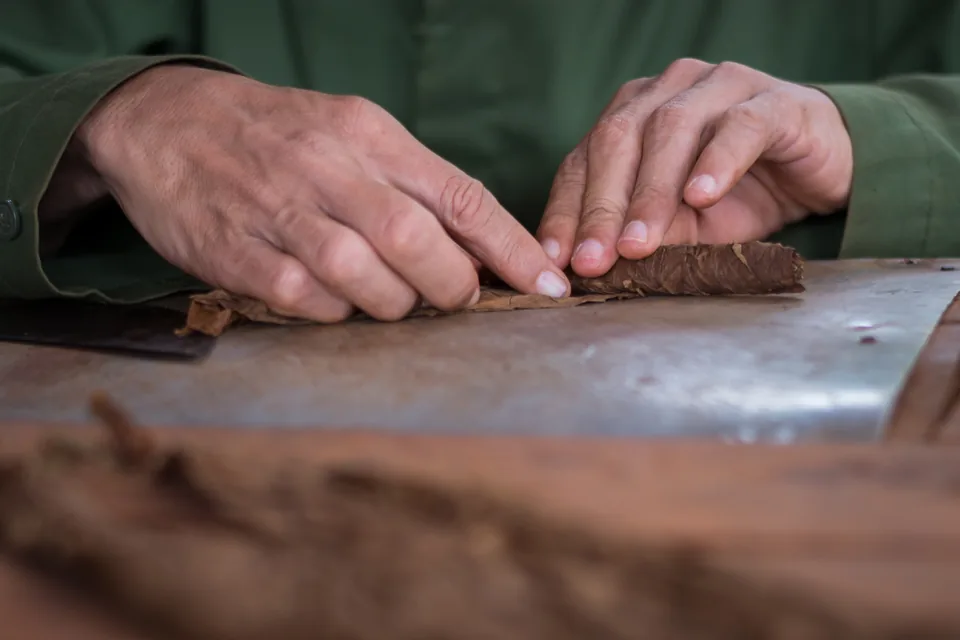
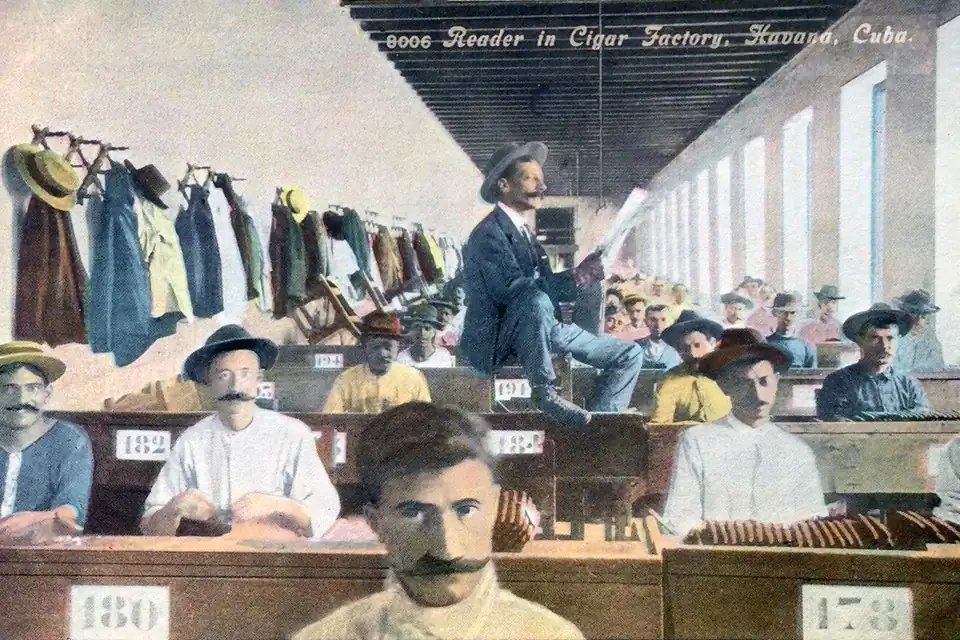
Rolling cigars by hand is quiet, skilled and repetitive. In 1865, workers at Havana’s El Fígaro factory began paying a reader, the lector, to read aloud while they worked. The lector read newspapers, novels and political writing. As a result, cigar rollers were among the best-informed workers of their time. The custom survives in Cuban factories today.
Tampa and Ybor City
Cuban cigar makers also crossed to the United States. Political unrest in Cuba and US import tariffs pushed factories north, first to Key West, then to Tampa.
In 1886, the Spanish-born manufacturer Vicente Martinez Ybor built a large brick factory near Tampa and moved his business there from Key West. A company town, Ybor City, grew around it. Other factories followed, and by around 1900 Tampa was known as the cigar capital of the world. Its workers were mostly Cuban, along with Spaniards and Italians.
The lectors came too. They read in Tampa’s factories for decades. However, after a bitter strike in 1931, owners removed the readers, and the American tradition faded.
Revolution, embargo and a divided cigar world
The 20th century brought machines and then politics. Machine-made cigars grew cheaper and more common. Our guide to hand-rolled vs machine-made cigars explains the difference. Still, the bigger shock came from Cuba.
After the revolution of 1959, the new government nationalised the tobacco industry in 1960. Many factory owners and growers left the island. Some took their brand names and their knowledge with them. In 1962, the state formed Cubatabaco to run the industry. That same year, on 7 February, the United States signed a full trade embargo on Cuba.
The result was a split that still shapes cigar shops worldwide. Exiled families rebuilt famous names in the Dominican Republic, Honduras, Nicaragua and elsewhere. So today there are Cuban and non-Cuban versions of brands such as Montecristo, Romeo y Julieta and H. Upmann. Our cuban cigar history explains the details.
The 1990s cigar boom
For a while, cigars seemed old-fashioned. Then, in the early 1990s, they came roaring back. Cigar Aficionado magazine launched in autumn 1992, and its glossy image of cigars as a reward for success caught on. Celebrities posed with cigars, and new cigar bars opened across the United States.
Demand rose faster than anyone could supply. According to industry figures cited on Wikipedia, US premium cigar imports peaked in 1997 at several times their early-1990s level. Makers ran short of aged tobacco, and many new brands appeared almost overnight. Some were excellent; others used young, harsh leaf.
By the late 1990s, supply caught up and the boom cooled. Many weaker brands vanished. Even so, the boom left a lasting mark. It created a generation of serious smokers and a new class of boutique makers.
Common myths in the history of cigars
A few stories appear so often that people treat them as fact. Here are three worth handling with care.
- “Cigars were rolled on the thighs of Cuban women.” This is a romantic image, nothing more. Rollers have always worked at benches, using a board and a curved blade called a chaveta.
- “Columbus brought cigars to Europe.” In fact, his crew observed smoking in 1492, but the habit spread slowly. It took decades, and a whole colonial trade, before tobacco was common in Spain.
- “Rodrigo de Jerez was jailed for smoking.” As noted above, the evidence is thin. It makes a good tale, though it may not be true.
Telling legend from record matters, because the real history of cigars is interesting enough without decoration.
The modern era
Today’s cigar world is more varied than ever. Nicaragua has grown into a powerhouse of full-bodied cigars. The Dominican Republic remains a giant, and Honduras is a major producer. In Cuba, Habanos S.A., formed in 1994, markets the island’s cigars in many countries. Our guide to types of cigars introduces the styles you will meet.
Regulation has also changed the scene. Many countries now restrict where people can smoke and how tobacco is advertised. Malaysia is one of them, under the Act 852 rules. Health research is also clear that cigars carry real risks, as our page on cigar health risks explains.
Where the history of cigars goes next
The history of cigars is still being written. Asia has become a key market, and Malaysia has had its own Habanos regional edition since 2021. To follow that thread, read about cigars in Southeast Asia. For a quick overview, the cigar history timeline sets out the key dates in one table.
Frequently asked questions
Who invented cigars?
No single person did. Indigenous peoples of the Americas smoked tobacco rolled in leaves for centuries before 1492. The Maya left some of the earliest images of it, and the Taíno of the Caribbean were smoking rolled leaves when Columbus arrived.
When were cigars invented?
There is no exact date. A Maya vessel from Uaxactun in Guatemala, dated before the 11th century, shows a man smoking a roll of tobacco leaves. Tobacco use in the Americas is far older than that image.
How did cigars reach Europe?
Spanish sailors and settlers brought tobacco back from the Caribbean after 1492. Spain grew a cigar industry centred on Seville, and soldiers returning from the Peninsular War of 1808 to 1814 made cigars fashionable in Britain and France.
Why did cigar factories have readers?
Rolling cigars is quiet, repetitive work. From 1865, Havana workers paid lectores to read newspapers and novels aloud. The custom spread to Tampa and became a channel for news and political ideas.
What caused the 1990s cigar boom?
Many things at once: a strong economy, a new image for cigars as a symbol of success, and the launch of Cigar Aficionado magazine in 1992. Demand rose so fast that makers ran short of aged tobacco.
Sources
- NBC News — Nicotine traces in a 1,300-year-old Maya flask
- Wikipedia — Tobacco and art (Maya depictions, Uaxactun vessel)
- Wikipedia — Rodrigo de Jerez
- Wikipedia — Royal Tobacco Factory, Seville
- Cigar Aficionado — Rings around cigars: the cigar band
- Wikipedia — Vicente Martinez Ybor
- Wikipedia — Lector (cigar manufacture)
- Wikipedia — Cubatabaco
- Cigar Aficionado — The story of Cigar Aficionado
- Wikipedia — Cigar boom